
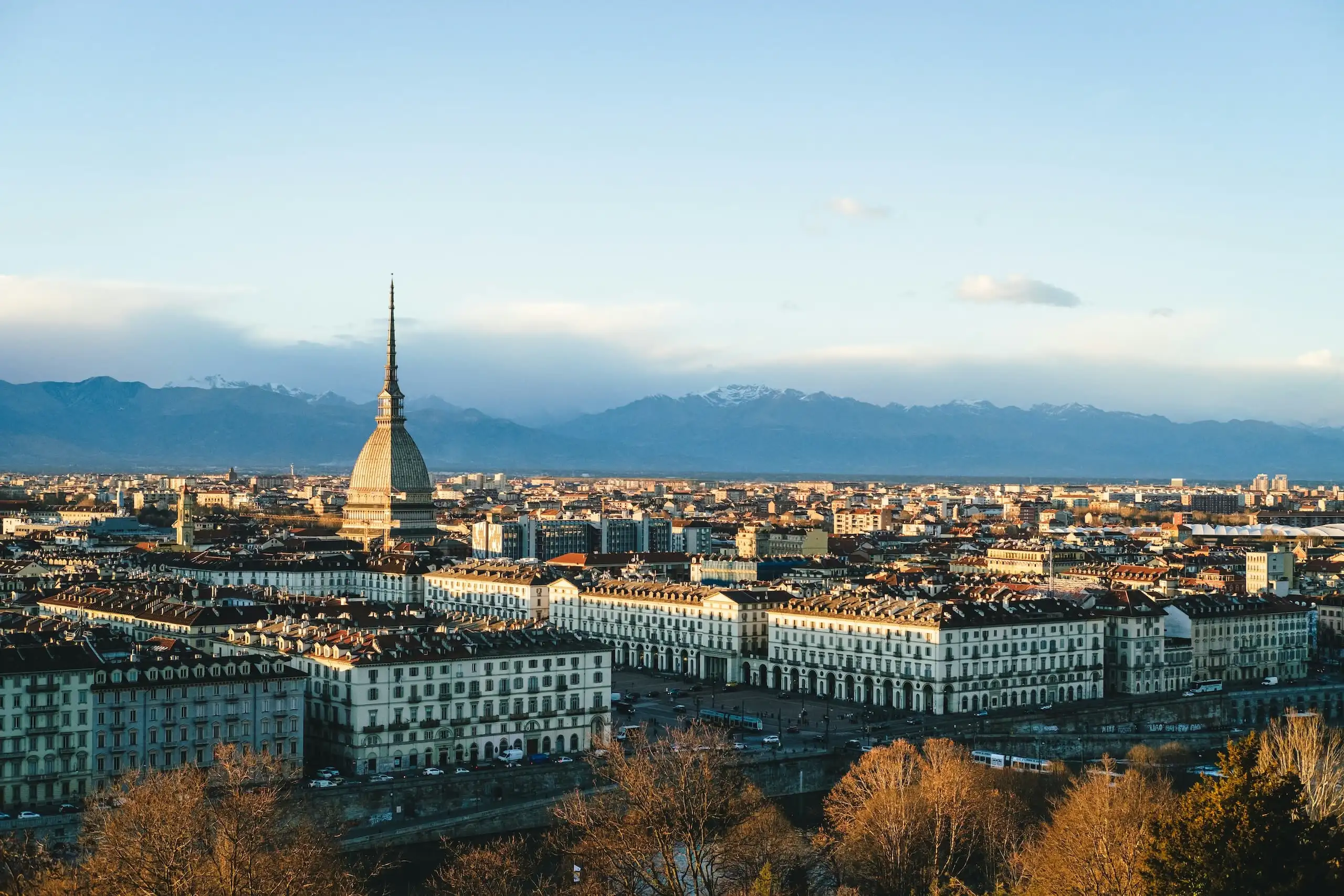
Turin is an aristocratic “old lady” with a glorious past and a brilliant present. The first capital of Italy, it is now known as a city of innovation, art and culture, automotive excellence, philanthropy and social innovation projects, food and even magic!
Lively and elegant, always in motion, Turin is a city surrounded by greenery, with over 300 km of tree-lined avenues and countless parks.
The Savoy imprint
Between the 16th and 18th centuries, the Savoy dynasty surrounded itself with a series of residences designed by the finest architects of the time, places for court life and symbols of their growing authority. Palaces and leisure estates along rivers, on hills, and in the surrounding countryside formed what is known as the “Crown of Delights”. For centuries, Turin’s center was the heart of Savoy political power, which is why the “Palaces of Power” stand close to one another: Palazzo Reale, Palazzo Madama and Palazzo Carignano.
Court life also meant entertainment, celebrations, and ceremonies in the residences surrounding the city. In the heart of its park, expanded by Christine of France in a style reminiscent of the Loire castles, the Castello del Valentino now hosts the Faculty of Architecture of the Politecnico di Torino. On the lower hillside, Villa della Regina was created as a vineyard estate with Italian-style gardens, pavilions, fountains, and agricultural areas.
Designed as a hunting residence for Carlo Emanuele II, the famous Reggia di Venaria has been the focus of one of the largest restoration projects ever and is now used for exhibitions, concerts, and major events. The Palazzina di Caccia di Stupinigi – where Napoleon once stayed, was another favorite Savoy retreat for leisure and hunting.
Finally, devotion: the Savoy family’s religiosity is visible in the construction and expansion of churches and sanctuaries. The main example is the Basilica di Superga, a Baroque masterpiece overlooking the city and housing the Royal Tombs of the Savoy family. From its vantage point, you can enjoy the breathtaking panorama that Jean-Jacques Rousseau described as “the most beautiful sight the human eye can admire”.
I musei
Turin boasts a rich museum heritage, with over 40 museums across the city, each reflecting its history, culture, knowledge, international spirit, and diversity.
The Museo Egizio, the second most important Egyptian museum in the world, is the only one besides the Cairo Museum entirely dedicated to Egyptian art and culture.
A more modern art form is showcased at the Museo Nazionale del Cinema, located inside the Mole Antonelliana, the city’s iconic landmark. It offers an interactive journey through the world of cinema, and at its center, a panoramic glass elevator rises to the top, offering a full view of Turin.
On Monte dei Cappuccini, stands the Museo Nazionale della Montagna “Duca degli Abruzzi”, founded in 1874 by the first members of the Italian Alpine Club to symbolically unite the mountains of the world.
Turin’s industrial vocation is represented by the Museo Nazionale dell’Automobile MAUTO, which tells the story, evolution, and social impact of the automotive industry.
The city is also Italy’s capital of contemporary art, with international institutions such as the GAM-Galleria d’Arte Moderna e Contemporanea, la Fondazione Sandretto Re Rebaudengo, la Fondazione Merz, la Pinacoteca Giovanni e Marella Agnelli, il Castello di Rivoli Museo d’Arte Contemporanea, il MEF-Museo Ettore Fico and Camera-Centro Italiano per la Fotografia.
Magical Turin
During “magical mystery tours”, you can explore the city’s dual nature, starting from its darker, more sinister side, among angels and devils, eerie stone monsters, and haunting architecture.
Among the highlights are Piazza Statuto, said to be the center of the black magic triangle together with London and San Francisco, the former house of Nostradamus nearby, and the Palazzo del Diavolo in Via Alfieri. In contrast, a triangle of white magic is believed to exist around Piazza Castello and its alchemical caves, with another key site being the Gran Madre di Dio church, said to connect Turin with Prague and Lyon.
The city of taste
Eating well in Turin is an art, a tradition of excellence ranging from wine to cheese, coffee to aperitivo. You can experience this outstanding cuisine in over 600 restaurants across the city.
Starters alone offer an endless variety, meat, fish, vegetables, eggs, cured meats, and cheeses, all served with “grissini”, invented in the 17th century for Prince Vittorio Amedeo II of Savoy. Among first courses, you can’t miss agnolotti, pasta filled with meat and served with roast sauce, butter and sage, ragù, or broth.
Don’t miss the wide range of high-quality artisanal cheeses from the Alpine valleys, and of course, everything is accompanied by great Piedmontese wines: Barolo, Barbaresco, Barbera, Arneis, and many more.
APERITIVO
A truly local ritual: the aperitivo. Whether in modern bars or historic cafés that have welcomed intellectuals, tourists, and businesspeople for centuries, the pre-dinner drink accompanied by countless snacks is an unmissable tradition.
HISTORIC CAFÉS
Little has changed in Turin’s historic cafés, the heart and soul of its tradition and culture, a safe choice to taste elegant subalpine pastries in a refined setting.
CHOCOLATE
Turin has been the chocolate capital of Europe since the 17th century. The history of chocolate is deeply tied to the city and the Piedmont region, where the first hot chocolates, chocolate houses, and the famous gianduiotto, made of cocoa and hazelnuts, were created.
The city of innovation
Not only museums and royal residences. Turin is also an innovative, dynamic, and ever-evolving city, welcoming visitors into new spaces and grand avenues built or redeveloped from former industrial areas by world-renowned architects, helping it earn the title of UNESCO Creative City of Design.
The largest infrastructure project since World War II is the Spina: a network of wide boulevards, green spaces, and cycling paths made possible largely by the construction of the metro, which once divided the city in two.
Along it, you’ll find Porta Susa, Italy’s most beautiful contemporary station, and the grattacielo Intesa San Paolo by Renzo Piano, both made of glass and steel, the OGR Officine Grandi Riparazioni – once a 19th-century industrial complex and now a hub for creativity and culture – the new Cittadella del Politecnico, the “diamond” of the district heating plant.
And then new landmarks. CNN International included the innovative Campus Einaudi di Norman Foster, among the ten most beautiful university buildings in the world. The Nuvola, is an ecosystem of spaces open to the neighborhood, the city, and the world.
Discover what’s happening in the city during WordCamp Torino 2026
Not enough?
Well, Turin is full of events. Discover what’s happening before, during, and after WordCamp Torino. Enjoy the beauty and the spectacle.
Thanks to Turismo Torino for providing the text
May in Turin is not just a month, it’s a state of mind.
While the Torino Jazz Festival offers its final unmissable events (until May 2), the city is preparing to welcome the Salone Internazionale del Libro (May 14 to 18).
But curiosity doesn’t stop there. Be amazed by the performances of the Torino Fringe Festival (starting May 19) and dive into the world of comics and cosplay with Torino Comics, debuting in its new venue at the Certosa di Collegno.
And more, the vibrations of the Jazz is Dead Festival, the melodies of the Late Spring Music Festival at the Reggia di Venaria, contemporary dance with Interplay, photography with Exposed Torino Photo Festival and The Phair – Photo Art Fair and the Festival del Verde!
Useful Information for Your Stay
To make the most of your time in Turin during WordCamp, here are some practical tips on getting around and exploring the city efficiently.
Getting Around: GTT Public Transport
Turin’s public transport network (GTT) is extensive and includes buses, trams, and an automated metro line.
- Where to buy tickets: You can purchase tickets at newsstands, tobacco shops (tabaccheria), or from automatic vending machines in metro stations.
- GTT App: Download the TO Move app to buy and activate tickets directly from your smartphone (available for Android with NFC and iOS).
- Tap&Go: This is the easiest way to travel! You can pay for your fare directly on board buses, trams, and at metro turnstiles by tapping your contactless credit/debit card (or smartphone/smartwatch) on the dedicated green readers.
- Fares: A “City 100” ticket costs €2.00 and is valid for 100 minutes. Daily passes are also available and highly recommended if you plan multiple trips.
Torino+Piemonte Card: Culture and Transport Discounts
If you plan to visit two or more museums, the Torino+Piemonte Card is your best option.
- Benefits: It offers free or discounted entry to most museums and Royal Residences.
- Transport Discount: Only when purchasing the Card at official Tourist Information Centers, you are eligible for a special discounted rate on GTT public transport passes (48 or 72-hour tickets).
- Tourist Information Centers: You can buy the card or ask for assistance at Turismo Torino offices located at:
• Piazza Carlo Felice (directly in front of Porta Nuova railway station)
• Piazza Castello/Via Garibaldi
• Piazza Giovanni XXIII (near the Cathedral and within walking distance of the Mole Antonelliana)